
Nobody said no to the Marshall Plan. It almost died anyway.

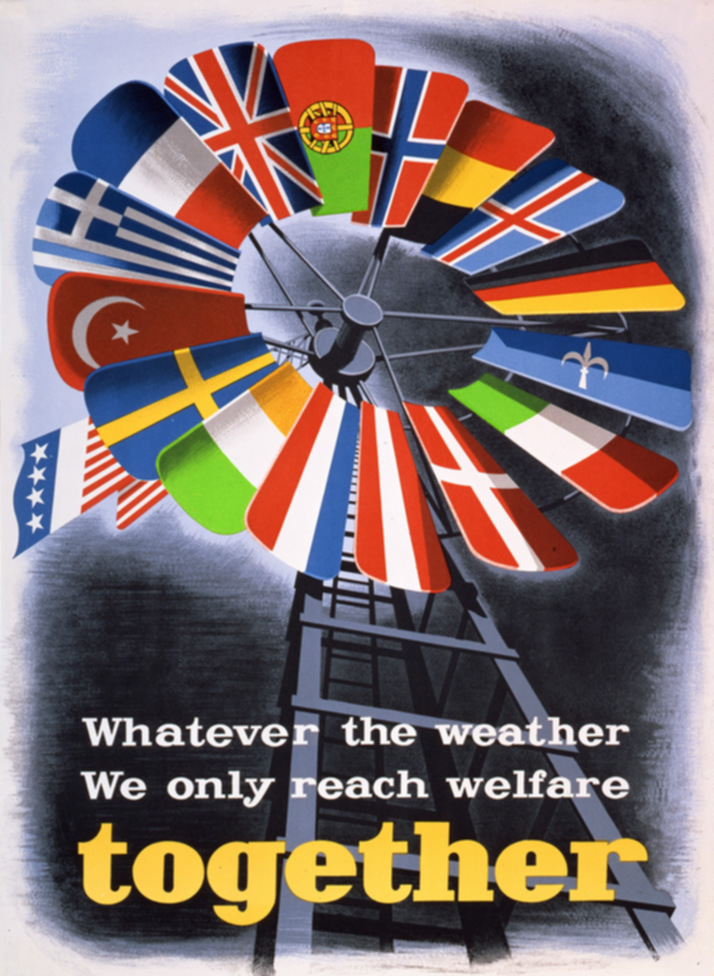
On June 5, 1947, Secretary of State George C. Marshall stood in Harvard Yard and named the situation: Europe’s economy was broken and collapse was coming. He named the mission: recovery. Then he did the thing almost no leader does. He refused to write the plan. “The initiative, I think, must come from Europe.” Sixteen nations met in Paris that summer and wrote the program themselves. And then came the part history compresses to a sentence: ten months of hearings, speeches, and stalling before Congress passed the Economic Cooperation Act, signed April 3, 1948. The marshall plan leadership lessons are not in the speech. They are in the ten months.
The leader wrote two sentences, not the plan
Look at what Marshall actually did in that speech. He defined the Situation: the set of circumstances dictating a need for action. He defined the Mission: European recovery, built by Europeans. And he stopped there, on purpose.
In the SEAL Teams the leader sets the Situation and the Mission. The team builds the Actions. Here is the mission, now tell me how you are going to do it. That is not generosity. It is engineering. People fight for the plan they wrote. A recovery program drafted in Washington would have died in Europe. One written by sixteen European nations had owners on the ground before the first dollar moved.
Most leaders get this exactly backwards. They hand their teams a finished plan and wonder why nobody defends it when it stalls.
And it will stall. Because a plan with owners still has to get funded.
Marshall plan leadership lessons for your stalled initiative
In my book I define the resistance as that unexplained force of nature that works to limit us from accomplishing great things. It shows up as uncertainty, procrastination, committees, and budget cycles. It almost never shows up as a flat no.
That is what Marshall walked into. Congress in 1947 was not full of villains. It was full of tired people. A country deep in war debt, an isolationist instinct, and a very reasonable question: why us, and why now? So the resistance did what it always does. It agreed the idea was right and voted later. For ten months.
Watch what Marshall did with those ten months, because it is the whole lesson. He did not water down the mission to make it easier to pass. He did not rewrite the plan every time a committee frowned at it. He kept re-arguing the Situation. Testimony after testimony, city after city, he put the “why” back in front of the people withholding the yes, until events in Europe made it undeniable. In March 1948 the Senate voted 69 to 17 and the House voted 329 to 74. More than 13 billion dollars followed, and Western Europe’s recovery with it.
I watched a client’s union lose the same fight with their Corporate office for a decade. Good ideas, real passion, and a habit of hoping to be heard. The year they stopped hoping and started planning for being ignored, the fight ended in hours.
The resistance is a running contingency. It never goes away, and it is not personal. You do not beat it once. You outlast it.
Apply it this week
- Name your resistance. Take your most important stalled initiative and write down the form the resistance is taking. A budget freeze. A skeptical boss. A “next quarter.” You cannot outlast what you refuse to name.
- Run the log. For one week, every time you meet the resistance on that initiative, log it: what form it took, whether you succumbed or overcame, and how fast you got back on board. You will succumb sometimes. Judge yourself on the recovery speed, not the stumble.
- Re-argue the Situation, not the plan. The Marshall move. When the yes is being withheld, stop polishing the plan and put the “why” back in front of the people withholding it, in their terms, until it is undeniable.
Take it to your team
Three questions to read out loud Monday morning. Let the room answer.
- Question one. Which of our initiatives has been “approved but not funded” the longest, and what form is the resistance actually taking?
- Question two. When our plans stall, do we re-argue the plan or re-argue the why? What would re-arguing the why look like this week?
- Question three. Where are we waiting for someone above us to write the plan, when we could write it ourselves the way Europe wrote the program?
Marshall gave one short speech and then spent ten months refusing to go away. That is the part nobody puts on a poster, and it is the part that fed a continent. The marshall plan leadership lessons come down to one sentence: set the Situation and the Mission, let your people own the plan, and outlast everything that votes later. This is Moment 03 of Leadership Moments in History. Last week: The Cuban Missile Crisis ExComm.
Keep your eyes on the target. — Errol
This moment is one of many.
Leading from the inside out. The full story and the complete methodology, born of blood, not a whiteboard. The resistance gets its own element.
Get the BookReal events, real decisions, and the principle each one proves. A new moment every week, all in one place.
See All MomentsBattle-tested leadership from the SEALs, the FBI, and the boardroom. No fluff. Unsubscribe anytime.

Leave a Reply